LUBNYMASH – обладнання для елеваторів


CONTACT US
About the factory
The “LUBNYMASH” plant has a long history and is currently recognized as one of the leading companies in the design and manufacture of equipment for grain and grain products. Its products combine high quality, absolute reliability, and maximum safety.
THE FOUNDING OF THE FACTORY
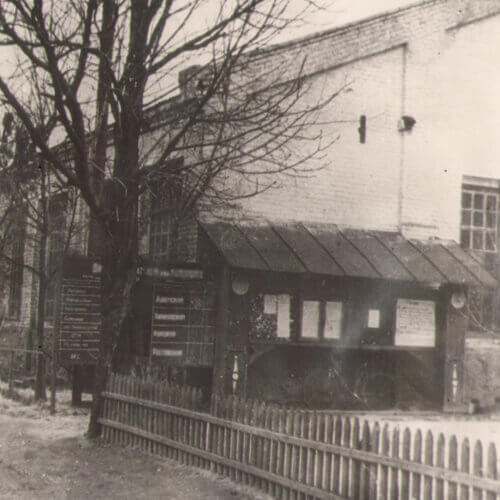
1888. Itsko Avramovich Shurkhin opens a workshop at the corner of Dvoryanskaya and Pyriatinskaya Streets (now Yaroslav the Wise Street and Vladimirsky Avenue). The workshop is located in the basement of the Slyusarenko building.
1890. A 12-year-old boy named Yosyp Nikonovich Kompaniets arrives at Shurkhin’s workshop as an apprentice.
1893. To expand his workshop, Shurkhin purchased a plot of land on Pyriatynska Street. The number of employees was 20. The workshop already had a horse-powered lathe and a cupola furnace for smelting non-ferrous metals. The work performed included repairing agricultural machinery and metal hardware, as well as casting door handles and candelabras.
1903. Shurkhin purchases a plot of land on part of what is now the territory of the “LUBNYMASH” plant. A foundry and a modeling department are established. Shurkhin refers to his facility as a plant. He transfers his old workshop to Yurivsky, a blacksmith who had been working for him.
1908. Up to 40 people worked at the factory. Shurkhin himself, an excellent blacksmith, had no experience in management positions or formal education, so he sold his business to Borovoy and Kobakov, while remaining at the factory as the foreman. The new owners began by completely replacing the equipment; they purchased a diesel engine and machine tools driven by a transmission. They established a plant management office and an accounting department. The workshop was renamed the “Mechanic” Cast Iron and Copper Foundry and Metalworking Plant. The rest of Lubny’s enterprises ordered metal parts (for repairs and reconstruction) from the “Mechanic” plant.
1914. The factory was working for the war effort, producing axles for steam-powered wagons, attempting to cast bomb casings from cast iron, and manufacturing small lathes for military field workshops (using parts obtained from other enterprises); however, the military authorities rejected both.
1917. The plant’s owners (Kabakov and Borovoy) sold the plant to a Kremenchuk-based tobacco factory owner, and Kabakov’s son was appointed plant manager. Kabakov Jr. led the plant into serious financial trouble. For several months, the workers at “Mechanika” did not receive their wages.
1920–1927. There were no notable events during this period in the plant’s history.
1928. The beginning of the plant’s restoration. At that time, the plant had “Scrap Materials” workshops. These included small shops: a machine shop, a blacksmith’s shop, a foundry, and a soap-making workshop. An experienced craftsman, Nakhim Yosypovych Gurevich, was invited to work in the workshops, and he brought a lathe with him. The separately located workshops were closed down, and the equipment was moved to the vacated premises.
1929. A new group of workers arrived at the factory—children from an orphanage. They mainly carried out repair work and fulfilled orders from other companies.
1930. The plant was named “Komsomolets.” The foundry resumed operations; by this time, the forge and the old mechanical shop had been restored. There were up to 25 workers. The products manufactured included wheel hubs, various forgings, cast iron products, and repair work commissioned by other enterprises and farms.
1932. A new organization called “Zagotzerno” was established on the basis of “Soyuzkhleb” and “Centrosoyuz,” and the “Komsomolets” plant became part of it. According to archival documents—specifically, the “KOMSOMOLETS” factory’s registration certificate, drawn up in 1940—the date of its founding was 1932.
1933–1939. During this period, a workshop was built, a 50-horsepower engine was installed, and later a 75-horsepower locomobile, which powered the entire plant. An oxy-acetylene welding apparatus was acquired. The following workshops were in operation: the machine shop, the foundry, and the forge.
1939. By the end of the year, the plant employed 150 people. The main products manufactured were: bucket elevators, pulleys, wagon axles, 10-cubic-meter tanks, and belt conveyors. Of the 30 pieces of equipment, only 6 were individually driven by electric motors; the rest were powered by a transmission or manual drive. Before the war began, the plant’s workforce numbered 330 people, including 240 workers, and gross output amounted to 1,753 thousand rubles. On the eve of the Great Patriotic War, although the “KOMSOMOLETS” plant was a small enterprise, it had grown significantly and was fulfilling important state orders—including stationary and mobile conveyors, elevator transmission equipment, and bucket elevators—as well as carrying out a great deal of repair work.
1941. The factory workers continued their peaceful labor until June 22. The factory workers left for the front. The factory was preparing for evacuation, but due to a lack of transportation, only the “Kommunar” factory was evacuated. German troops seized the “Komsomolets” factory and renamed it “Greif-Werke.” During the war, prisoners of war and German soldiers repaired military equipment and agricultural machinery at the factory.
1943. At the end of September, following the liberation by Soviet troops and the victory over fascism, the city lay in ruins. Of the “Greif-Werke” factory, only two buildings—the boiler shop and the foundry—remained. The best equipment, including a new lathe, had been removed. Along with the reconstruction of the workshops, repair work was carried out to restore the destroyed railway bridge across the Sula River.
1944. Ivan Yevdokimovich Nelin was appointed director. The factory implemented an access control system, established a time-and-attendance system, and set up a clear work schedule. All the necessary conditions for work were put in place: two meals a day, financial incentives, bonuses, and occupational safety measures.
The foundry section operated only once a week (due to difficulties with the electricity supply), so when the cupola furnace was in operation, the other workshops were forced to idle. There was a shortage of skilled workers and equipment, but they managed to establish production of the following: the Pilorama-50 sawmill, elevator legs, transmission equipment, and a prototype of the “Pioneer” construction crane.
Construction is beginning on the power plant building, the foundry, and the boiler room, as well as on the extensively renovated building at 106 Radianska Street, which was built in 1936.
The machine shop had 12 machine tools; there was no small-scale mechanization. In the foundry, molds were poured using hand ladles. Production capacity was 50 metric tons of castings per month. There were no tooling, design, or quality control departments. A production and technical department consisting of five people handled all of these functions.
1948. After the war, an electrically powered overhead crane was designed and installed in the machine shop, and similar cranes were later installed in other shops as well.
The production plan through November 1 was fulfilled, and 500,000 in excess profits were generated. The production process for a stone crusher, a combined planer, and a hoist is being fine-tuned. A foundry laboratory begins operations in the foundry shop. New equipment—cranes, electric carts, and pneumatic and electrical equipment—is introduced to assist the workers. The plant’s staff repeatedly wins socialist competition awards within the Ministry of Procurement system.
1950. A metrology service is established, and personnel are appointed to oversee the control of measuring instruments. A small toolmaking department is set up (with one toolmaking machine). The team is reinforced with qualified personnel.
The plant continued to adopt new technology. The drive and tension stations are being upgraded.
1958. All technical resources were devoted to the production of a grain dryer. A dedicated team was formed and began mass production of fans.
A building housing the plant administration offices and a kindergarten with a total area of 115 m² was constructed. The plant library began operating in 1951.
The 1960s–1970s. Mykhailo Hryniuk was appointed director of the plant. He had worked at the plant for over 16 years.
The plant grew rapidly, new production capacity and new technologies were introduced, construction continued, and at the same time, the plant began shipping its products.
Twenty-two workers were added to the staff, and a capital construction department was established. Six residential buildings were constructed over the course of the ten-year plan. In 1969, a kindergarten building, utility rooms for the steel structure shop, and a warehouse for the assembly section were built.
Over the years, a great deal of new equipment has been installed (such as a conveyor line), and many production processes have been mechanized. The sharpening machines are currently being modernized.
Demand for castings began to rise steadily, so the foundry was renovated.
Over the past five years, production has increased by one and a half times, and labor productivity has risen by 30%.
Among the company’s new products are machines for loading and unloading operations at grain elevators. These include a pneumatic transfer system for transferring grain or mixed feed from railcars to a conveyor belt, and a conveyor for stacking containerized cargo and bags. The plant has also begun manufacturing grain carbonation systems.
A special commission is being formed at the plant to inspect equipment intended for export. The corn drying lines, fans, bucket elevators, and swivel pipes currently being manufactured are being shipped to India, Iran, Afghanistan, Poland, and Mongolia.
1970. In honor of the 100th anniversary of V.I. Lenin’s birth, the plant’s staff was awarded the Lenin Certificate of Honor. The profit target was met at 127%, and the product sales target at 105%.
1974. The enterprise is suffering from a labor shortage, poor work organization, and a lack of equipment. The five-month production plan has not been met. The plant is undersupplied with castings, electric motors for corn huskers, and materials, which has led to delays in production. The annual shortage of castings amounted to 886 metric tons. Management is planning a series of measures to address these shortcomings.
1974. The enterprise is suffering from a labor shortage, poor work organization, and a lack of equipment. The five-month production plan has not been met. The plant is undersupplied with castings, electric motors for corn huskers, and materials, which has led to delays in production. The annual shortage of castings amounted to 886 metric tons. Management is planning a series of measures to address these shortcomings.
1976. In April, Viktor Zinovievich Skvirsky was appointed director of the plant. There were changes in leadership in some departments, and the workforce was revitalized. Following a decline in production, the plant began to ramp up output. Changes were made to work organization and production culture, and wages increased.
A production control center began operating at the plant. A radio system was installed to facilitate day-to-day operations. Thanks to this system, production plans are established in advance based on sound reasoning, records are kept accurately and promptly, and specific targets are set for each month, decade, and day. All of this has ensured a steady production rhythm and a high level of cost efficiency.
The facade of the plant administration building has been renovated. Construction is beginning on a steel structure workshop with a painting department.
1977. A comprehensive product quality management system and company-wide standards are introduced.
A bureau for the mechanization and automation of production processes is being established; members of the new bureau and the work crew have overhauled some of the machines and mechanisms. They manufactured a dispenser for molding mixture components and overhead mechanisms for loading and unloading operations. As a result, the amount of manual labor has been reduced by 80%.
1978. A community work day was held, during which the fountain was finished and the surrounding area was landscaped. It is the pride of the plant; to this day, no other enterprise can boast such beauty.
1980. A large-scale food program and measures to improve the standard of living and well-being of workers became an important part of the plant’s operations. Flour mills and grain elevators received equipment, machinery, and devices on schedule.
1984. Construction was completed on a residential and service building and a 5,000 m² workshop, which housed the design, process engineering, and power and mechanical departments, the central plant laboratory, a 100-seat cafeteria, and modern recreational facilities. Warehouse facilities and a 20-bay garage were constructed. A railroad track for delivering railcars was built. A 12-metric-ton gantry crane and a railroad crane were installed.
Semi-automatic CNC machines began to be widely used.
Production is being ramped up for products that receive the highest quality ratings. This includes a grain silo loading system, a scraper conveyor, a high-pressure fan, and hatches.
The company’s machine tool fleet is expanding—a high-speed “AIDA” press has been purchased for the manufacture of metal grates. In the late 1980s, the company began manufacturing consumer goods: a metalworking bench, garage shelving, car running boards, a car jack, shafts for circular saws, rakes, shovels, and “Burzhuika” stoves for summer cottages.
1990. The plant, which was under the jurisdiction of the “Zernoproduct” State Scientific and Production Association, employed 780 people. Of these, 547 were workers, 126 were specialists and office staff, and 57 were managers. The well-known political events in the country radically changed the situation at the plant. The plant is going through difficult times, but it is one of the few enterprises in the city that has managed to survive even amid economic chaos.
1994. The small enterprise “Metalist” and “Siltechservice” LLC were established, producing consumer goods—heating boilers, garage doors, and fence panels. A pesticide fogger was undergoing testing. Production of trailers and platforms for semi-trucks was launched in collaboration with the “Avtomash” plant. A demonstration was held of a prototype of Ukraine’s first rotary mower, with a capacity of 1.7 metric tons of mowed grass per hour. Technical documentation was developed for a prototype heating boiler that runs on solid fuel and gas and includes a water heating device. Virtually all products were manufactured to individual orders, including screw conveyors, belt conveyors, residential fireplaces, shaped parts, and more.
1995. The “Komsomolets” Plant was registered as a business entity under collective ownership by the shareholders of OJSC “Komsomolets” Machine-Building Plant. As part of the preparations for the plant’s 110th anniversary and the 1010th anniversary, a 39-unit apartment building was completed.
They participated in the renovation of the children’s clinic and the emergency medical station, as well as the reconstruction of the stadium. At the plant, the roofs and staff facilities were repaired, and rest areas were set up near the foundry and machine shop sections.
1996. On December 18, the first general founding meeting of shareholders was held, at which Grigory Mikhailovich Karunsky, the plant’s director, was elected Chairman of the Board.
1997. To ensure the effective operation of the joint-stock company in a market economy, efforts were made to restructure production. Production units were consolidated. A welding and assembly shop was established.
The volume of commercial production and sales has been increasing year after year.
2000. The plant operated under difficult economic conditions. Despite this, it managed to retain its workforce and improve the performance of its production units. The volume of marketable products increased by a factor of 1.46 compared to 1999. Products are not mass-produced for stock; each item is made to order.
Eight types of new equipment, manufactured at the plant for the first time, have been put into operation. These include a non-adjustable belt conveyor, bucket elevators, hoppers for loading railcars, and others.
“Hopper”—a railcar unloader—was awarded a P-Level Diploma and the “Poltava Brand—2000” Diploma.